

+91 9904512277


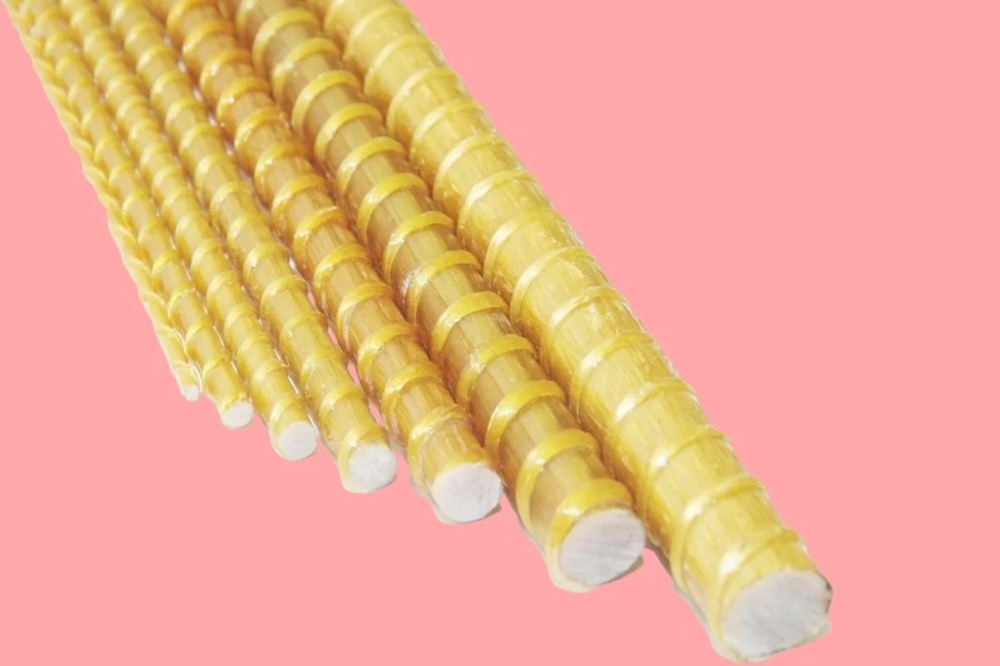
AMROCK was established with 100% corrosion free reinforcement solutions at its engineering core. As a dedicated GFRP rebar manufacturer in India, AMROCK supplies Glass Fibre Reinforced Polymer (GFRP) rebars to infrastructure, construction, marine, and industrial projects across India and international markets.
Where conventional steel reinforcement corrodes in chloride laden coastal zones, chemical plant slabs, sewage treatment structures, and marine precast elements. GFRP rebar reinforcement eliminates the corrosion mechanism entirely. The result is a reinforcement system that performs for years without the progressive deterioration that defines the lifecycle cost of steel reinforced concrete in aggressive service conditions.
Glass Fibre Reinforced Polymer (GFRP) rebars, also referred to as FRP rebars, GRP rebars, or composite rebars, are a technologically advanced alternative to conventional mild steel reinforcement bars in concrete construction. Fabricated from a thermoset resin matrix reinforced with high tensile glass fibre strands, GFRP rebars incorporate a spiral wound surface deformation that achieves mechanical bond with concrete equivalent to that of steel reinforcement.
GFRP composite reinforcement has been deployed in infrastructure projects across the USA, Canada, Japan, Europe, and Australia for years as a proven, internationally validated corrosion prevention solution. In India, the Bureau of Indian Standards formalised GFRP rebar specifications under IS 18255:2023 and IS 18256:2023, with IRC:137-2022 providing guidelines for fibre reinforced polymer bars in road projects, marking the material's transition from international best practice to codified Indian construction standard.
100% non corrosive across chloride, sulphate, and chemical environments. No protective coating required at any stage of service life.
1000+ MPa tensile strength, exceeding twice the performance of standard steel reinforcement and delivering greater structural efficiency per unit weight.
Does not conduct electricity or interfere with electromagnetic fields. Specified for MRI rooms, airport compass calibration pads, power plant transformer sites, and light rail infrastructure.
Does not block radio frequency signals. Required in telecommunications, defence, and smart infrastructure applications.
Coefficient of thermal expansion closely matched to concrete, eliminating thermally induced micro cracking and substantially increasing long term structural durability.
No inspection regime, protective treatment, or repair intervention required across the full service life of the concrete structure.
Cut on site to custom lengths using standard tools. Available in coil form, no overlapping required, 50% less site manpower.
Non corrosive nature eliminates the extended concrete cover mandated for steel reinforcement, allowing thinner sections and reduced concrete consumption.
Higher fatigue resistance properties provide greater resistance to cyclical high intensity loads, suitable for seismically active zones per detailed structural design.
Lower embodied energy over the structure's full lifetime; eliminates the environmental and economic cost of corrosion driven repair cycles.
Diameter 4mm to 20mm. Available as straight bars, ready bent elements, and ready mesh panels.
Diameter: 4mm to 20mm | Length: Straight up to 12 metres | Coil up to 100 metres (4mm-8mm diameter)
Standard straight bar length is 12 metres. Coil supply for smaller diameters enables significant logistics cost savings and continuous placement without lapping, reducing both material waste and on site labour.
Supplied prefabricated, eliminating the need for site bending and ensuring dimensional consistency across large project volumes. Custom shapes are produced to structural engineer specifications.
Supplied as ready to place mesh panels, reducing site labour and accelerating slab and pavement reinforcement installation cycles. Ideal for RCC roads, industrial flooring, and large area concrete pours.
Full packing specifications per diameter, plus comparative weight data for GFRP vs steel rebar.
| Diameter | Steel Kg/m | Steel m/Ton | GFRP Kg/m | GFRP m/Ton |
|---|---|---|---|---|
| 6mm | 0.222 | 4,504 | 0.058 | 17,241 |
| 8mm | 0.395 | 2,531 | 0.103 | 9,708 |
| 10mm | 0.617 | 1,620 | 0.161 | 6,211 |
| 12mm | 0.890 | 1,123 | 0.232 | 4,310 |
| 16mm | 1.580 | 632 | 0.412 | 2,427 |
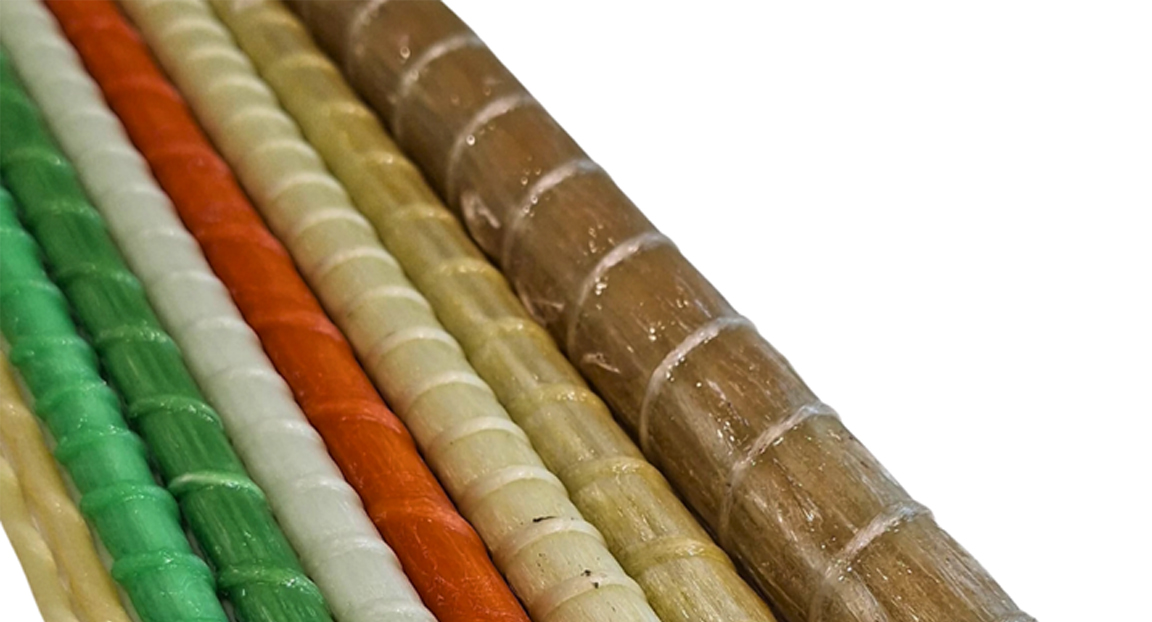
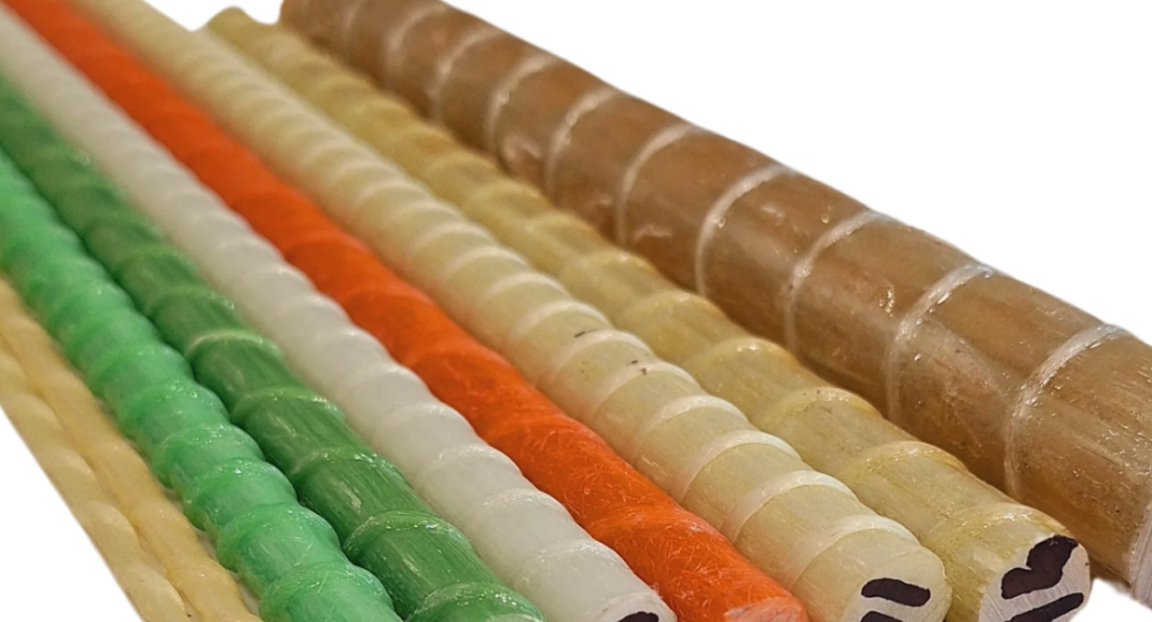
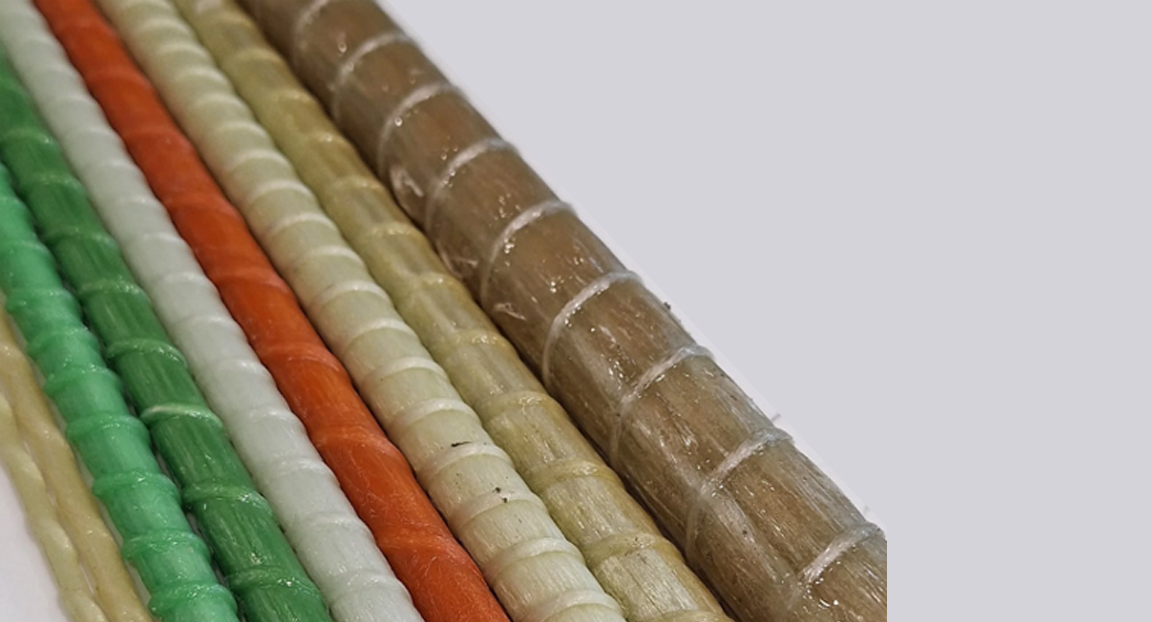
AMROCK GFRP rebars and FRP composite reinforcement are specified across the full range of structural applications where corrosion resistance, dielectric properties, or reduced self weight deliver performance or lifecycle cost advantages over conventional steel reinforcement.
Tell us about your project requirements, and our team will provide a customized quotation with the best solution for your application..